We harness the power of data for better decision making within an innovative organizational culture, through our team of Data Architects, Data Scientists and Data Engineers.
This evolves into gigantic volumes of data, which using the tools provided by the cloud allows us not only to improve its analysis but also to implement Machine Learning and AI to increase business intelligence.
Robotic Process Automation (RPA) and Artificial Intelligence that empower a rapid automation of end-to-end business processes and accelerate digital transformation.
Discovery workshop: The first step toward a true strategic digital partnership.
Before implementing new technologies, organizations need to understand where the greatest opportunities for value creation lie. A structured discovery process makes it possible to turn ideas into a concrete roadmap for innovation.
Technology trends 2026: The year of intelligent architecture
Technological evolution is no longer about adopting isolated solutions, but about designing intelligent architectures capable of learning, anticipating, and operating autonomously.
Financial Services in the Agentic Era: Modernize Without Losing Scale, Control, or Speed
95% of AI pilots fail to generate measurable financial impact. This paper explores how financial services organizations build real AI capabilities without sacrificing scale, control, or speed.
Learn about our architecture that combines at least one public and one private cloud to deliver the highest levels of scalability, flexibility, and performance.
Modernization of SAP on AWS: Efficiency, control and scale for a leading automotive company
A renowned automotive company accelerated its digital transformation by migrating and modernizing its SAP S/4HANA environment on AWS, ensuring operational efficiency, scalability and cost savings.
Gobernanza cloud que garantiza rendimiento, seguridad y eficiencia en el mundo del streaming
En un entorno donde la experiencia del usuario es clave, una reconocida plataforma de streaming confió en Nubiral para optimizar sus operaciones en AWS y escalar de forma segura, continua y eficiente.
Banking without core: APIs redefine competitive advantage
Agility and flexibility in the financial sector today arise from open architectures capable of linking services, integrating with ecosystems, and rapidly deploying new digital channels.
Application migration, optimization, efficiency, security, analytics and implementation services, with the aim of simplifying and accelerating the adoption of the latest IT trends in the market.
DevSecOps transformation: Speed, security and collaboration for modern development
A leading technology company modernized its development ecosystem with GitHub and Azure alongside Nubiral, reducing provisioning times and improving security.
Apps Modernization: Decisions That Redefine Business Agility
Evolving legacy systems without disrupting operations enables organizations to enhance development with AI, reduce technical debt, accelerate delivery cycles, and build software designed to continuously adapt to business demands.
We scale to environments with thousands of items monitored simultaneously.
We also capture data of systems and applications over time to make proactive decisions and to anticipate disruptions in business services.
End-to-End data governance for cybersecurity operations
One of the leading banks in Chile utilizes the most advanced AWS services to work on the ingestion, storage, detection, and predictive models of data from cybersecurity intelligence sources.
This new autonomous technology promises to accelerate business innovation, but it also raises questions about control, governance, and risk management in increasingly complex environments.
Secure AI development: Higher value and lower business risk
All about this approach to developing and deploying AI while ensuring ethical, legal, data protection, information security and accountability principles.
Discovery workshop: The first step toward a true strategic digital partnership.
Before implementing new technologies, organizations need to understand where the greatest opportunities for value creation lie. A structured discovery process makes it possible to turn ideas into a concrete roadmap for innovation.
This new autonomous technology promises to accelerate business innovation, but it also raises questions about control, governance, and risk management in increasingly complex environments.
Banking without core: APIs redefine competitive advantage
Agility and flexibility in the financial sector today arise from open architectures capable of linking services, integrating with ecosystems, and rapidly deploying new digital channels.
Financial Services in the Agentic Era: Modernize Without Losing Scale, Control, or Speed
95% of AI pilots fail to generate measurable financial impact. This paper explores how financial services organizations build real AI capabilities without sacrificing scale, control, or speed.
As an Advanced Consulting Partner of the AWS Partner Network, we think outside the box, daring to go where no one has gone before.
We constantly challenge ourselves to be better, providing your company with AWS solutions in a holistic and tailored way.
As Cloud Gold Partner, we work together with Microsoft every day to offer our clients the most innovative solutions based on the different microservices and capabilities that the Azure cloud offers.
Our team is constantly training and certifying on Azure’s services.
We scale to environments with thousands of items monitored simultaneously.
We also capture data of systems and applications over time to make proactive decisions and to anticipate disruptions in business services.
Nubiral and Diligent join to present a revolutionary solution that will transform the way organizations manage their GRC (Governance, Risk, and Compliance) processes.
We harness the power of data for better decision making within an innovative organizational culture, through our team of Data Architects, Data Scientists and Data Engineers.
This evolves into gigantic volumes of data, which using the tools provided by the cloud allows us not only to improve its analysis but also to implement Machine Learning and AI to increase business intelligence.
Robotic Process Automation (RPA) and Artificial Intelligence that empower a rapid automation of end-to-end business processes and accelerate digital transformation.
Discovery workshop: The first step toward a true strategic digital partnership.
Before implementing new technologies, organizations need to understand where the greatest opportunities for value creation lie. A structured discovery process makes it possible to turn ideas into a concrete roadmap for innovation.
Technology trends 2026: The year of intelligent architecture
Technological evolution is no longer about adopting isolated solutions, but about designing intelligent architectures capable of learning, anticipating, and operating autonomously.
Financial Services in the Agentic Era: Modernize Without Losing Scale, Control, or Speed
95% of AI pilots fail to generate measurable financial impact. This paper explores how financial services organizations build real AI capabilities without sacrificing scale, control, or speed.
Learn about our architecture that combines at least one public and one private cloud to deliver the highest levels of scalability, flexibility, and performance.
Modernization of SAP on AWS: Efficiency, control and scale for a leading automotive company
A renowned automotive company accelerated its digital transformation by migrating and modernizing its SAP S/4HANA environment on AWS, ensuring operational efficiency, scalability and cost savings.
Gobernanza cloud que garantiza rendimiento, seguridad y eficiencia en el mundo del streaming
En un entorno donde la experiencia del usuario es clave, una reconocida plataforma de streaming confió en Nubiral para optimizar sus operaciones en AWS y escalar de forma segura, continua y eficiente.
Banking without core: APIs redefine competitive advantage
Agility and flexibility in the financial sector today arise from open architectures capable of linking services, integrating with ecosystems, and rapidly deploying new digital channels.
Application migration, optimization, efficiency, security, analytics and implementation services, with the aim of simplifying and accelerating the adoption of the latest IT trends in the market.
DevSecOps transformation: Speed, security and collaboration for modern development
A leading technology company modernized its development ecosystem with GitHub and Azure alongside Nubiral, reducing provisioning times and improving security.
Apps Modernization: Decisions That Redefine Business Agility
Evolving legacy systems without disrupting operations enables organizations to enhance development with AI, reduce technical debt, accelerate delivery cycles, and build software designed to continuously adapt to business demands.
We scale to environments with thousands of items monitored simultaneously.
We also capture data of systems and applications over time to make proactive decisions and to anticipate disruptions in business services.
End-to-End data governance for cybersecurity operations
One of the leading banks in Chile utilizes the most advanced AWS services to work on the ingestion, storage, detection, and predictive models of data from cybersecurity intelligence sources.
This new autonomous technology promises to accelerate business innovation, but it also raises questions about control, governance, and risk management in increasingly complex environments.
Secure AI development: Higher value and lower business risk
All about this approach to developing and deploying AI while ensuring ethical, legal, data protection, information security and accountability principles.
As an Advanced Consulting Partner of the AWS Partner Network, we think outside the box, daring to go where no one has gone before.
We constantly challenge ourselves to be better, providing your company with AWS solutions in a holistic and tailored way.
As Cloud Gold Partner, we work together with Microsoft every day to offer our clients the most innovative solutions based on the different microservices and capabilities that the Azure cloud offers.
Our team is constantly training and certifying on Azure’s services.
We scale to environments with thousands of items monitored simultaneously.
We also capture data of systems and applications over time to make proactive decisions and to anticipate disruptions in business services.
Nubiral and Diligent join to present a revolutionary solution that will transform the way organizations manage their GRC (Governance, Risk, and Compliance) processes.
Discovery workshop: The first step toward a true strategic digital partnership.
Before implementing new technologies, organizations need to understand where the greatest opportunities for value creation lie. A structured discovery process makes it possible to turn ideas into a concrete roadmap for innovation.
This new autonomous technology promises to accelerate business innovation, but it also raises questions about control, governance, and risk management in increasingly complex environments.
Banking without core: APIs redefine competitive advantage
Agility and flexibility in the financial sector today arise from open architectures capable of linking services, integrating with ecosystems, and rapidly deploying new digital channels.
Financial Services in the Agentic Era: Modernize Without Losing Scale, Control, or Speed
95% of AI pilots fail to generate measurable financial impact. This paper explores how financial services organizations build real AI capabilities without sacrificing scale, control, or speed.
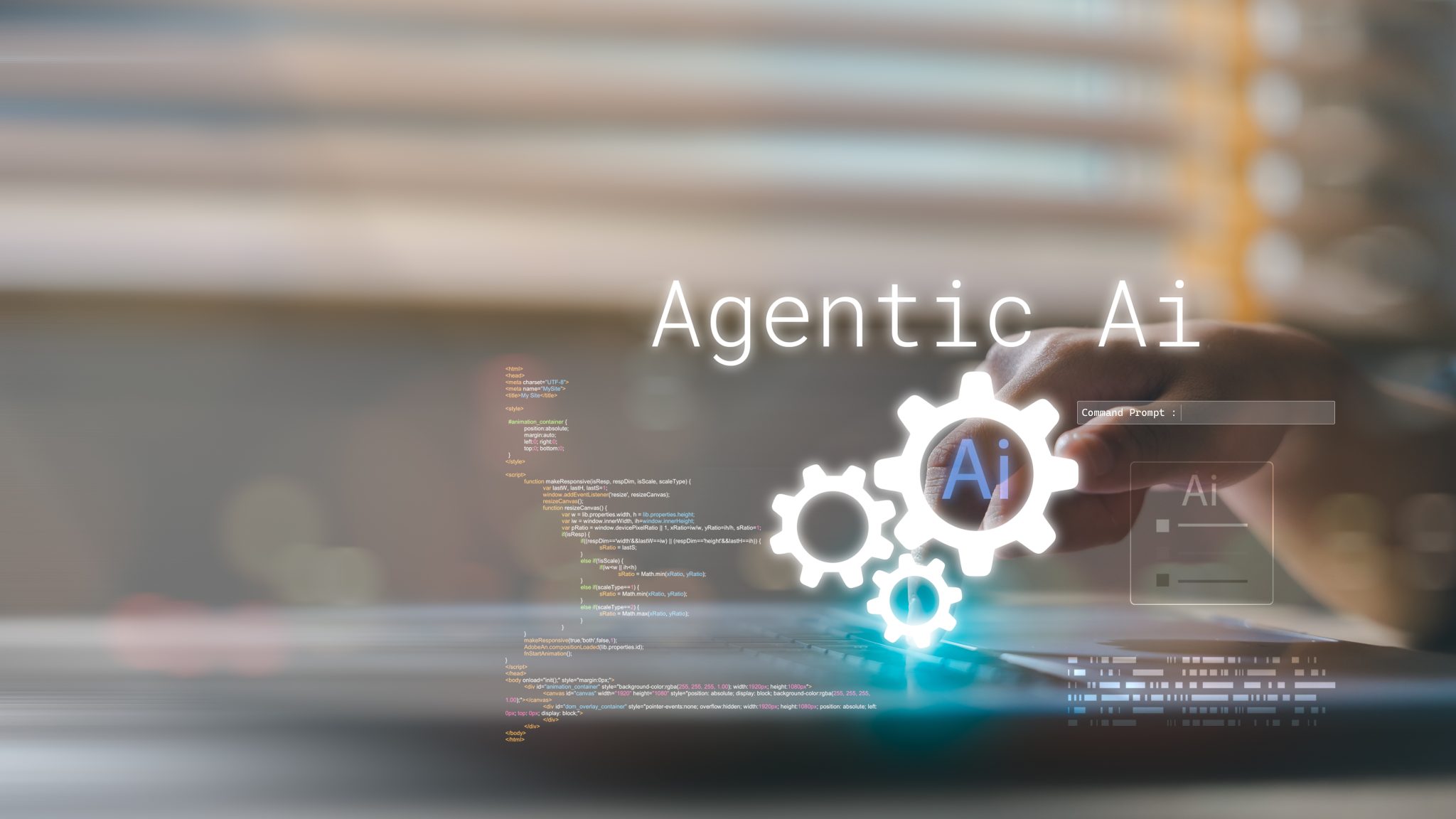
Agentic AI in the Executive Agenda: When Artificial Intelligence Stops Assisting and Starts Deciding
This new generation of autonomous systems is beginning to redefine productivity, workflows, and decision-making in organizations that aim to scale without losing control.
Over the past few years, AI has established itself as a key tool for automating tasks, optimizing processes, and accelerating decisions. However, what we have seen so far is only the beginning. A new stage is starting to take center stage in executive teams’ agendas: the emergence of Agentic AI.
We are talking about systems capable of operating autonomously, coordinating complex actions, and executing end-to-end workflows. It is more than a technological evolution: it represents a profound change in the way digital operations are designed, built, and scaled.
This new paradigm responds to a tension increasingly visible in organizations. On one hand, business needs: moving faster, launching products more frequently, reducing time-to-market, and maintaining high quality standards. On the other hand, the limitations faced by technical and functional teams: trapped between repetitive tasks, fragmented processes, long validation cycles, and growing pressure to meet increasingly demanding deadlines.
The result is often the same: bottlenecks, operational friction, and suboptimal use of talent.
Agents as a Strategic Element
In this scenario, intelligent agents propose a structural response. Unlike traditional automation approaches, focused on executing predefined instructions, they incorporate context, bounded decision-making capacity, and coordination across multiple systems.
Their value does not lie in doing the same things faster. It lies in redefining how work is organized, how responsibilities are distributed between people and machines, and how software and digital service creation flows are designed.
It is no coincidence that this topic is beginning to rise in the agenda of senior executives. When systems move from assisting to deciding, dimensions beyond technology come into play.
Orchestration, Governance, Responsibility
In this new scenario, orchestration becomes critical. Multiple agents must coordinate with each other and with legacy systems, cloud platforms, and business applications without generating inconsistencies or operational risks.
Governance also takes on a central role: defining what an agent can decide, under what rules, with what traceability, and with what mechanisms of human oversight.
Responsibility becomes unavoidable. Every automated action has potential impacts on processes, customers, regulatory compliance, and corporate reputation.
Traditional control and management frameworks need to be rethought. The adoption of Agentic AI cannot remain limited to isolated pilots or technical initiatives. It requires a comprehensive vision that combines architecture, security, ethics, change management, and strategic alignment.
Organizations that move forward without these pillars risk gaining speed in the short term but losing control, coherence, and trust in the medium term. Conversely, those that integrate orchestration, governance, and responsibility from the design stage will be better positioned to scale capabilities without compromising stability or compliance.
Agents at the Heart of Operations
In this context, the executive conversation is shifting from “what can AI do” to “how do we integrate it into the heart of operations.”
Agentic AI impacts productivity, costs, quality, time-to-market, and resilience. But it also redefines roles, skills, and organizational models. Leaders who understand this transition will lay the foundations for a new way of operating in increasingly complex digital environments.
The Right Partner at the Right Time
Nubiral has been working with organizations across different sectors to build agent orchestration platforms that integrate AI directly into critical workflows. The value proposition behind this approach lies in building an intelligent layer that securely and governably connects processes, data, and decisions.
Advanced orchestration, complete traceability, agent version control, and clear responsibility frameworks become the true differentiators for scaling Agentic AI in corporate environments.
Everything indicates that this technology will cease to be an emerging trend and become a basic strategic capability. Organizations must bring agents into the executive agenda. It is the necessary path to compete in a scenario where speed and quality will no longer be advantages, but requirements.
AI stops assisting and begins deciding. Defining the guidelines today to lead this change is a strategic decision.
How is the strategy behind intelligent agents evolving in your organization? Our team of experts is ready to help you navigate this path: Schedule your meeting!
Discovery workshop: The first step toward a true strategic digital partnership.
Before implementing new technologies, organizations need to understand where the greatest opportunities for value creation lie. A structured discovery process makes it possible to turn ideas into a concrete roadmap for innovation.
Technology decisions that must be made in 2026: The fundamental questions
Cloud and AI decisions can no longer be postponed: how you modernize, scale, and optimize today will define your ability to innovate, compete, and grow sustainably in the coming years.
Discovery workshop: The first step toward a true strategic digital partnership.
Before implementing new technologies, organizations need to understand where the greatest opportunities for value creation lie. A structured discovery process makes it possible to turn ideas into a concrete roadmap for innovation.
Webinar | Sustainability and Innovation: The path to an efficient and sustainable operation
Specialists in Sustainability and Business discuss the environmental problems that affect our daily lives, in addition with the benefits that the preservation of natural resources bring to companies.
Financial Services in the Agentic Era: Modernize Without Losing Scale, Control, or Speed
95% of AI pilots fail to generate measurable financial impact. This paper explores how financial services organizations build real AI capabilities without sacrificing scale, control, or speed.